
The Knowledge Hub
Practical troubleshooting guides for working analytical chemists — HPLC, UHPLC, LC-MS, GC, and reagent prep. Each guide is diagnostic-first and linked to the tool that resolves it.
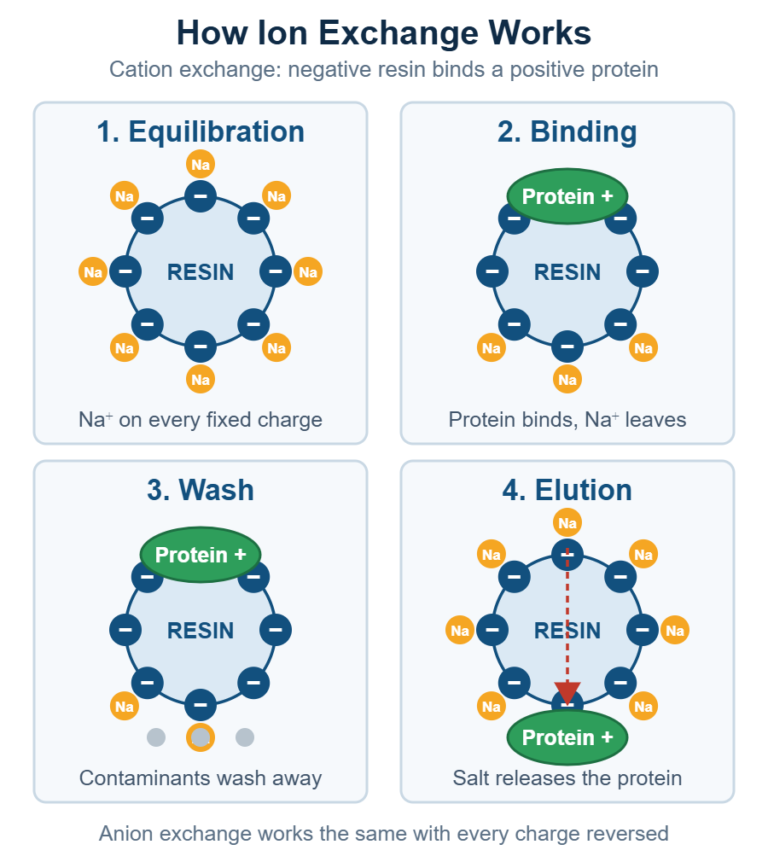
Ion Exchange Chromatography (IEX): Anion vs Cation, Resin Selection, and Method Setup
How ion exchange chromatography works, when to choose anion vs cation exchange, strong vs weak resins, and how to fix poor binding…
Signal-to-Noise Ratio for LOD: How to Measure and Use It in Chromatography
connectivity probe
LOD Calculation: How to Determine the Limit of Detection Using ICH Q2 Methods
The limit of detection is calculated as LOD = 3.3σ/S, where σ is the standard deviation of the response and S is…
Limit of Detection (LOD): What It Means and How It Differs from LOQ
The limit of detection is the lowest analyte concentration that a procedure can reliably distinguish from a blank, but not necessarily measure…
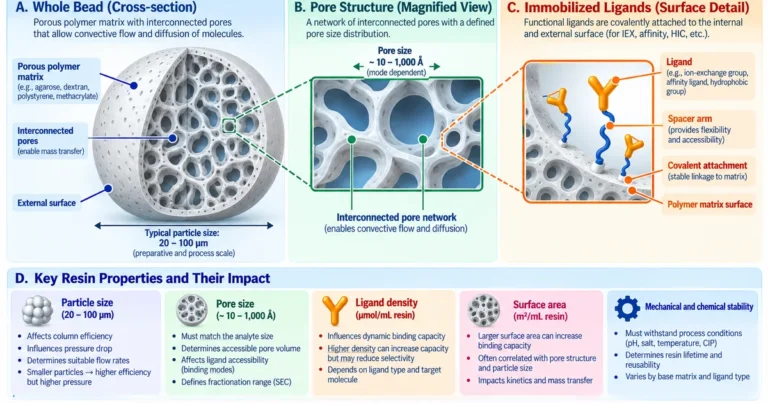
Chromatography Resins: Types, Properties and How to Select the Right Resin
A chromatography resin is the particulate stationary phase packed into a chromatographic bed: a base matrix, a defined particle size, an internal…
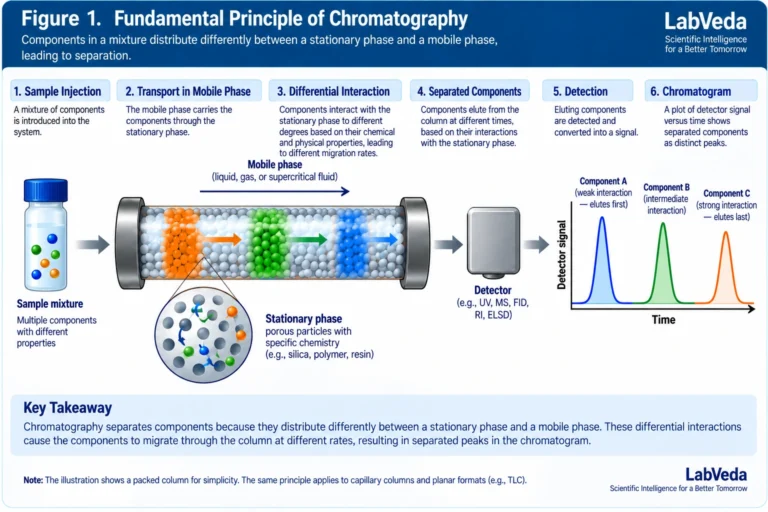
What Is Chromatography? Principles, Types, Separation Mechanisms, and Applications
Chromatography is a physical separation method in which the components of a mixture distribute differently between a stationary phase and a mobile…