
The Knowledge Hub
Practical troubleshooting guides for working analytical chemists — HPLC, UHPLC, LC-MS, GC, and reagent prep. Each guide is diagnostic-first and linked to the tool that resolves it.
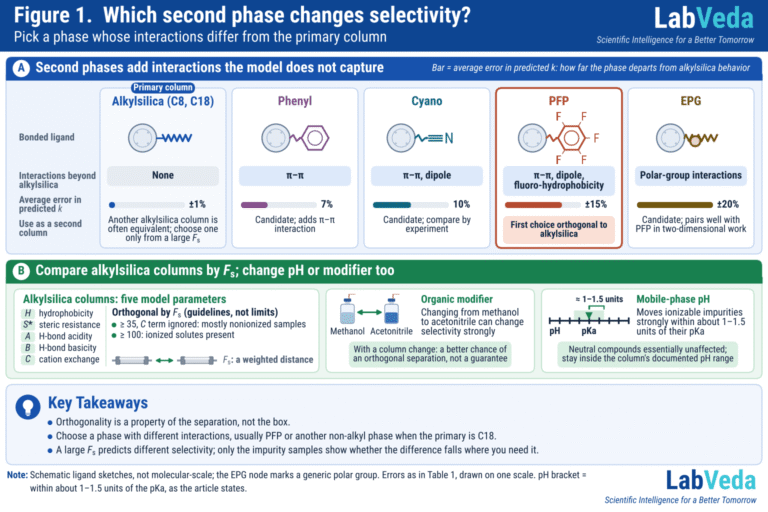
How to Choose an Orthogonal HPLC Column for Impurity Profiling
Choose an orthogonal HPLC column for impurity profiling by its selectivity, not its label. Pick a phase whose interactions differ from the…
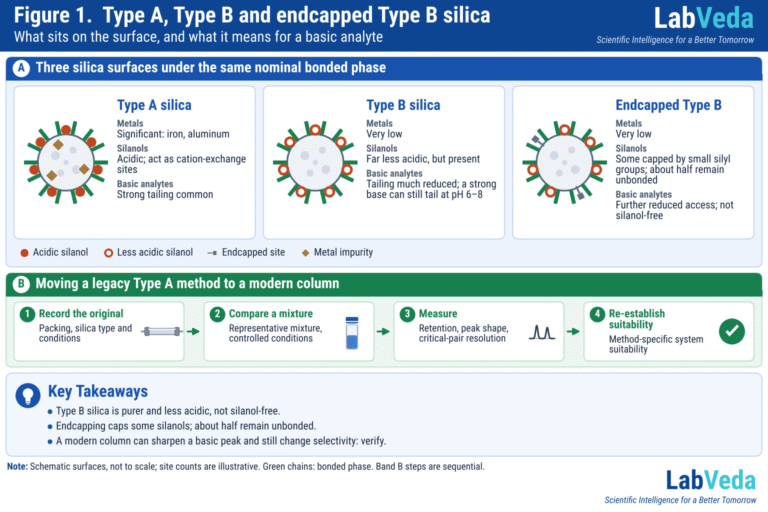
Type A vs Type B Silica and Endcapping: Why Basic Analytes Tail Differently
Basic analytes can tail differently on nominally similar HPLC columns because their silica surfaces expose different secondary interaction sites. Older Type A…
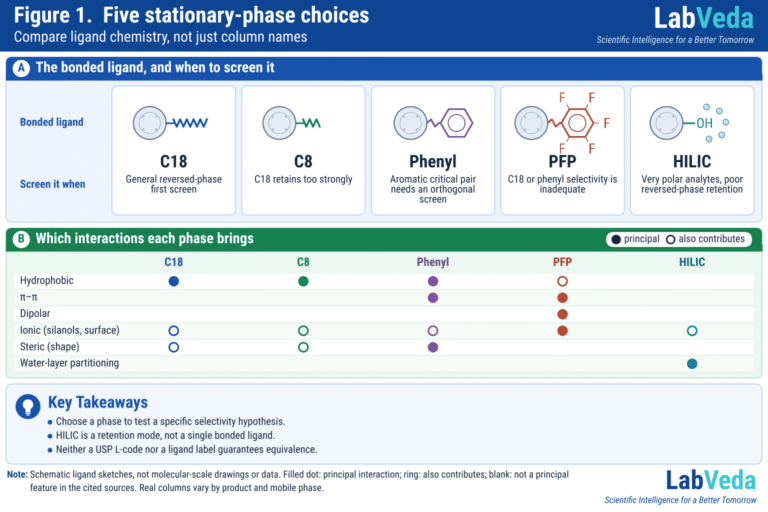
C18 vs C8 vs Phenyl vs PFP vs HILIC: How Stationary-Phase Chemistry Changes Selectivity
C18 and C8 primarily retain analytes through hydrophobic interactions, while phenyl and pentafluorophenyl (PFP) phases can alter selectivity through aromatic, dipolar and…
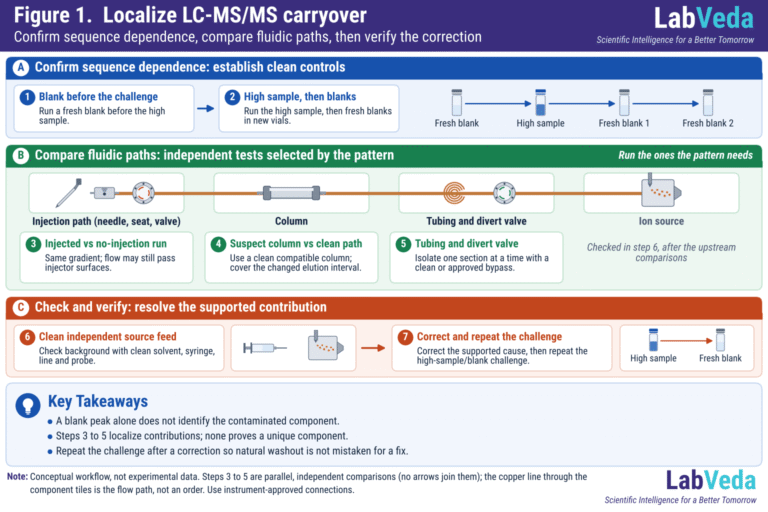
LC-MS/MS Carryover Localization: Autosampler, Column, Tubing or Source?
To localize LC-MS/MS carryover, first establish whether a clean blank acquires analyte-associated response after a high sample. Then compare an injected blank…
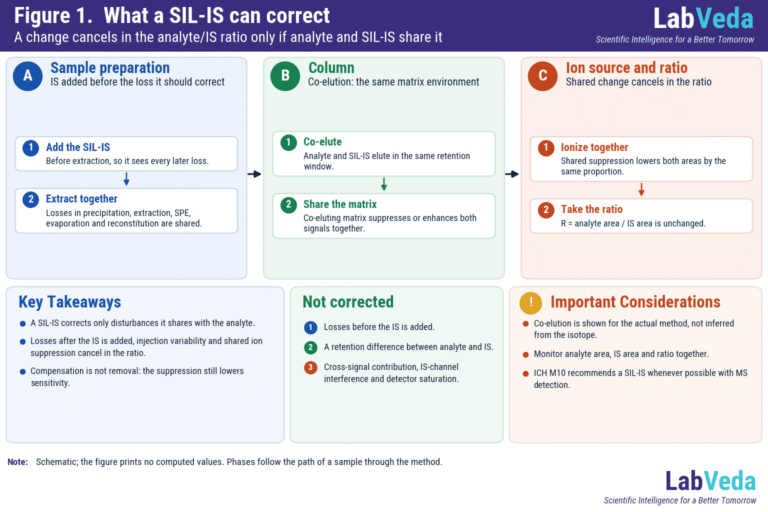
Stable Isotope Labeled Internal Standards in LC-MS/MS: What They Correct and What They Don’t
A stable isotope labeled internal standard (SIL-IS) corrects LC-MS/MS results only for disturbances it shares with the analyte. Extraction losses that happen…
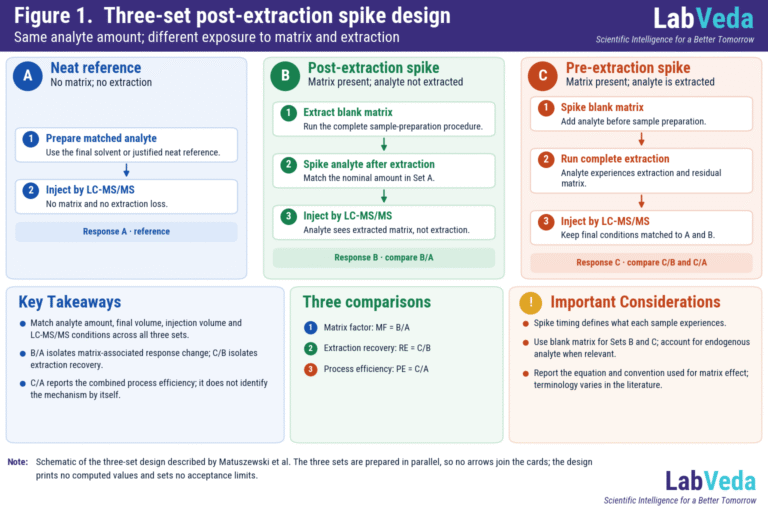
Post-Extraction Spike in LC-MS/MS: Matrix Factor, Recovery and Process Efficiency
A post-extraction spike experiment measures how much co-eluting matrix changes LC-MS/MS response, separately from how much analyte the sample preparation loses. Three…
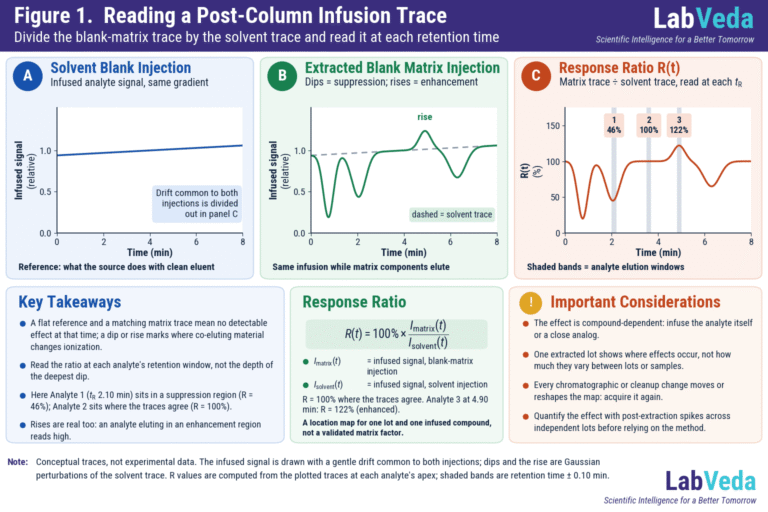
Post-Column Infusion for LC-MS Matrix-Effect Diagnosis: Setup, Interpretation and Limits
Post-column infusion is a qualitative LC-MS experiment that shows where in a chromatographic run co-eluting matrix components suppress or enhance ionization. A…
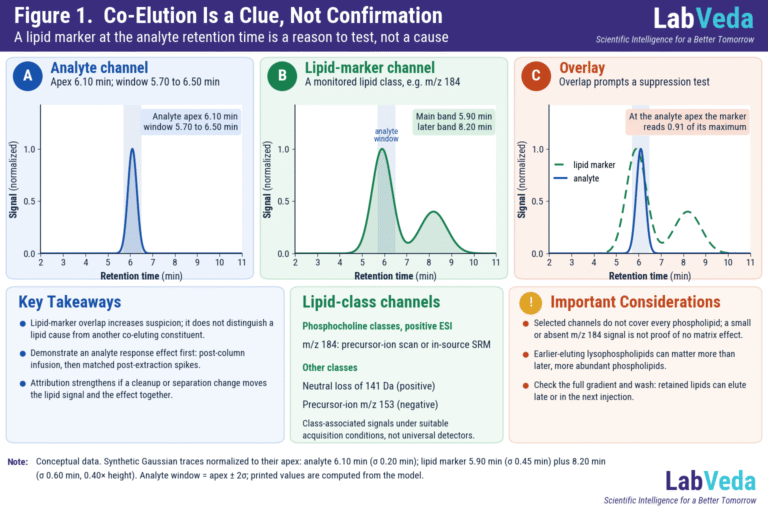
Phospholipid Interference in LC-MS/MS: How to Detect, Remove and Control It
Phospholipid interference in LC-MS/MS happens when phospholipids carried through sample preparation co-elute with an analyte and change its ionization. In a quantitative…
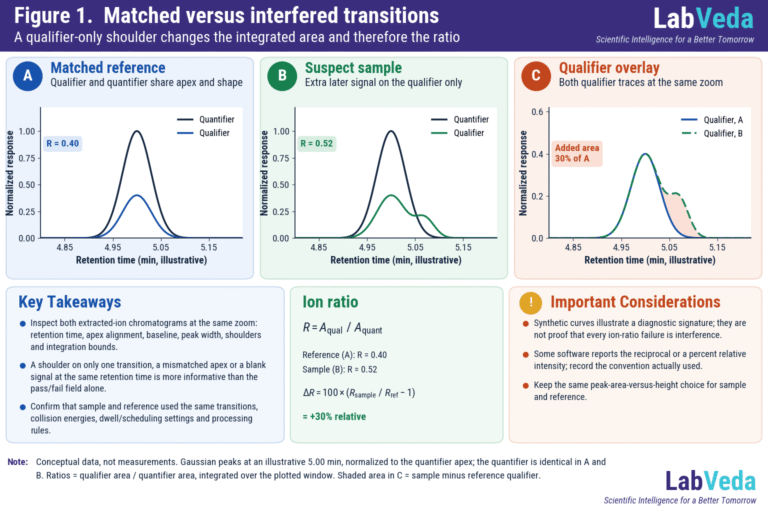
Why Does My LC-MS/MS Qualifier/Quantifier Ion Ratio Fail?
A failed qualifier/quantifier ion ratio means the relative responses of two monitored transitions differ from an appropriate reference. The deviation can reveal…
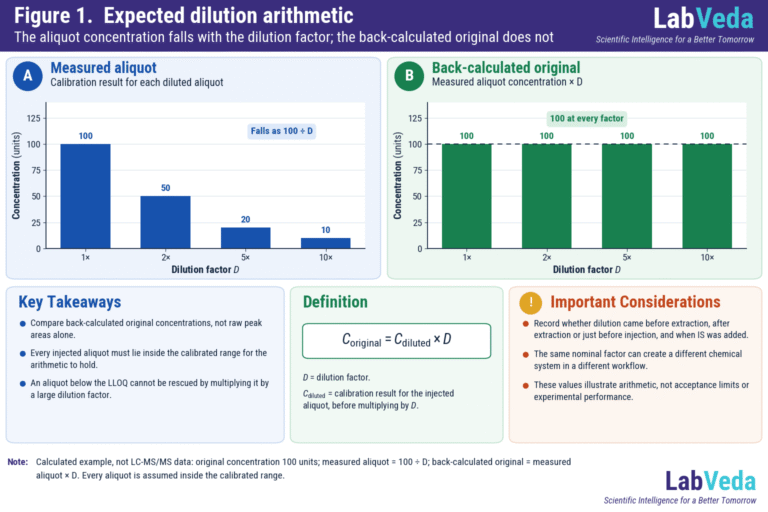
Why Does My LC-MS/MS Result Change After Dilution?
If the concentration you calculate for the original sample changes with the dilution factor, the result is a pattern, not yet a…
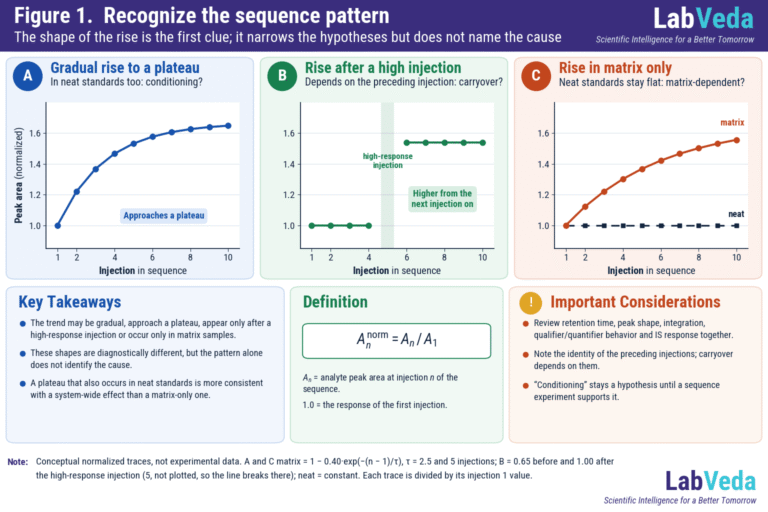
Why Are My LC-MS Peak Areas Increasing Across a Sequence? Causes, Diagnosis and Corrective Actions
An LC-MS/MS peak area that climbs across an injection sequence is a pattern, not a diagnosis. The rise can come from the…
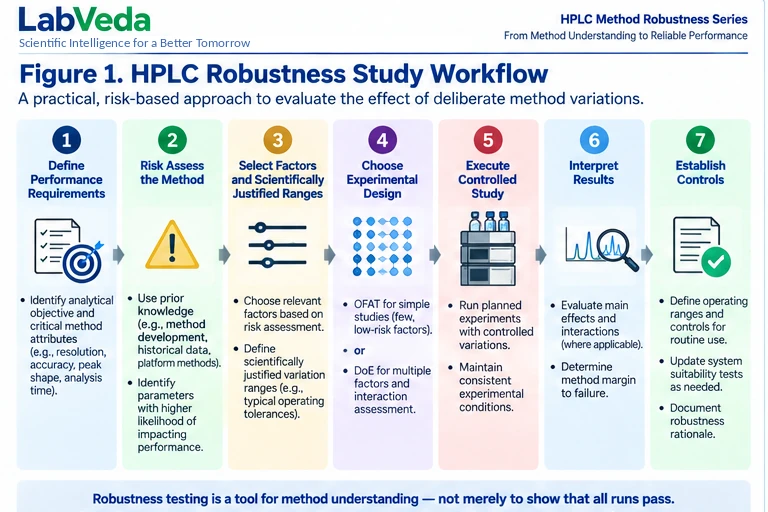
HPLC Method Robustness Testing: Parameters, Experimental Design and Interpretation
HPLC method robustness is the capacity of an analytical procedure to meet its expected performance requirements during normal use when procedure parameters…