
The Knowledge Hub
Practical troubleshooting guides for working analytical chemists — HPLC, UHPLC, LC-MS, GC, and reagent prep. Each guide is diagnostic-first and linked to the tool that resolves it.
HPLC Baseline Noise and Drift: How to Tell Them Apart and Fix Each
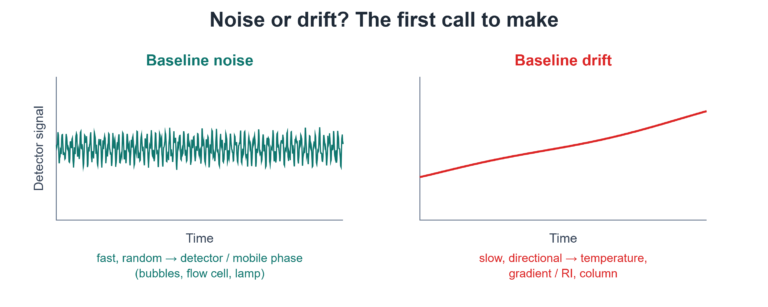
Figure 1. Noise versus drift. Fast random jitter points to the detector or mobile phase; a slow directional shift points to temperature,…
Ghost Peaks in HPLC: What Causes Them and How to Eliminate Them
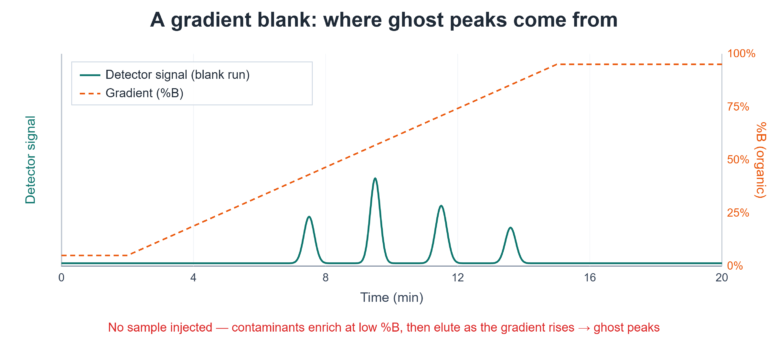
Figure 1. Ghost peaks in a gradient blank. Sharp peaks elute as %B rises even though nothing was injected — contaminant concentrated…
Why Your HPLC Peaks Are Tailing: Causes and a Diagnostic Path
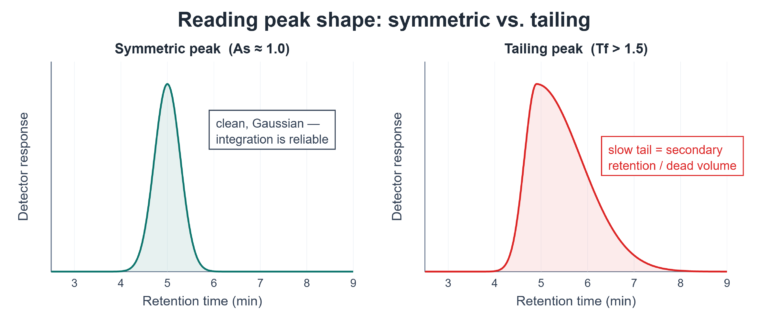
Figure 1. Symmetric versus tailing peak. A symmetric peak sits near As 1.0; the tailing peak shows the slow trailing edge produced…
High Backpressure in HPLC: 8 Root Causes and How to Diagnose Each One
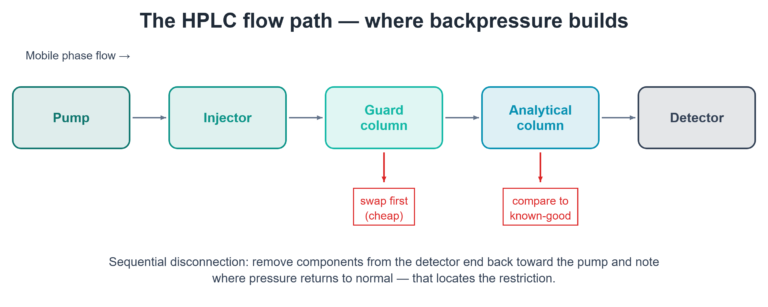
Figure 1. The HPLC flow path. Disconnecting components in sequence from the detector back towards the pump localises the restriction. High system…
Understanding Size Exclusion Chromatography Techniques
If you’re delving into the world of chromatography, you might have come across a technique called size exclusion chromatography (SEC). This method…
Understanding RF Values in Chromatography Techniques
The retardation factor, RF, is the migration coordinate used in planar chromatography. In TLC, HPTLC and paper chromatography it expresses how far…
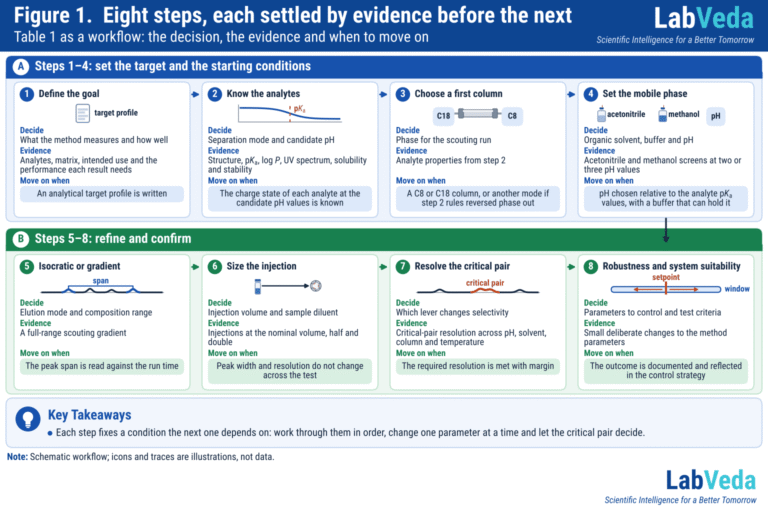
How to Develop an HPLC Method: A Step-by-Step Practical Guide
An HPLC method is developed in eight steps: define what it must measure, learn the analytes’ properties, choose a first column, set…
What is Void Volume in Chromatography?
Void volume (V0) is the volume of mobile phase inside the column — the space between and within the packing particles that…
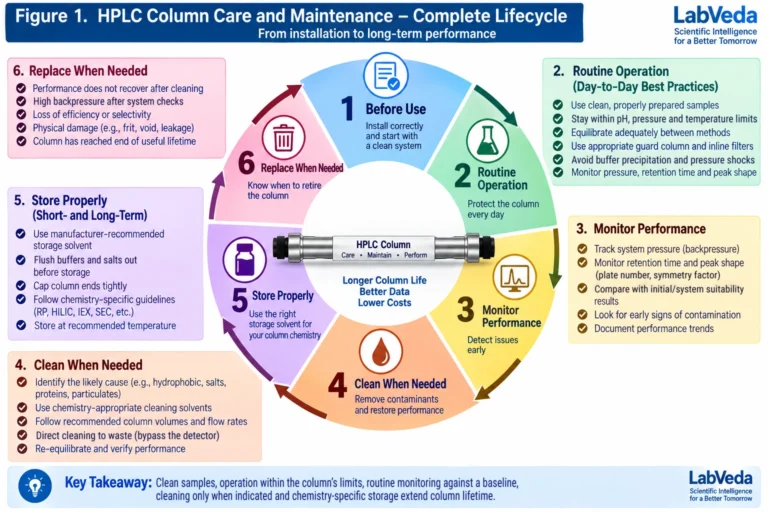
HPLC Column Care and Maintenance: How to Protect, Monitor and Store a Column
HPLC column care is the set of preventive practices that keep the packed bed, the inlet frit and the stationary phase in…
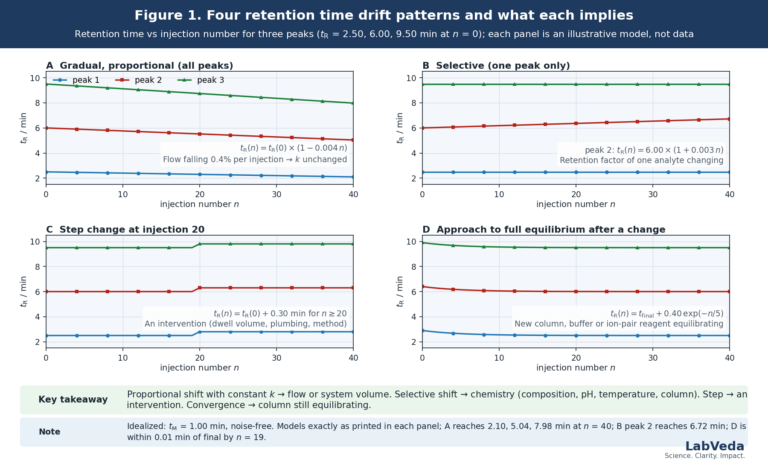
Drifting HPLC Retention Times: Causes, Diagnosis and Fixes
Drifting HPLC retention times are diagnosed by their pattern. Because tR = tM(1 + k), a shift that moves every peak by…