
The Knowledge Hub
Practical troubleshooting guides for working analytical chemists — HPLC, UHPLC, LC-MS, GC, and reagent prep. Each guide is diagnostic-first and linked to the tool that resolves it.
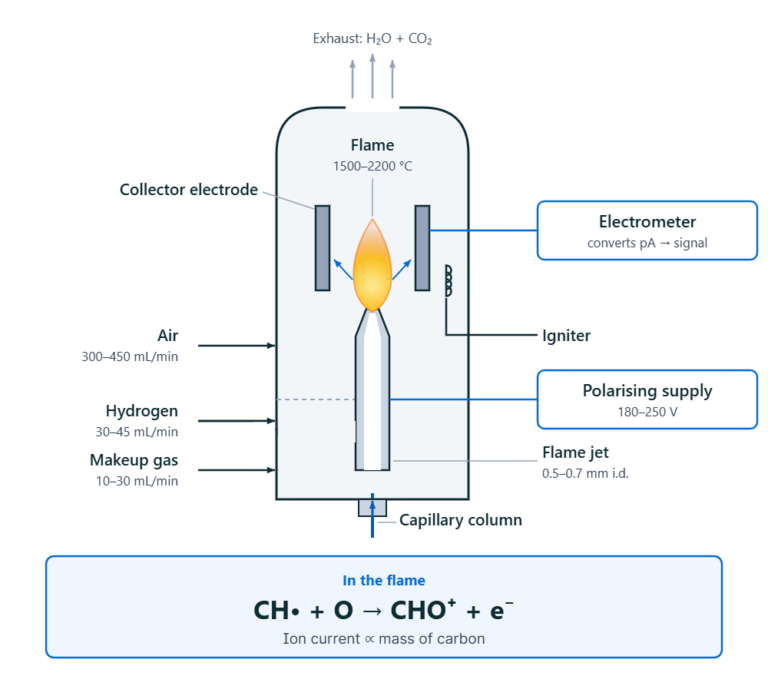
Flame Ionization Detector
A flame ionization detector burns column effluent in a hydrogen–air flame and measures the tiny electrical current produced by the ions that…
Potassium tert-butoxide
Description: Potassium tert-Butoxide, a tetrameric cubane-like cluster, is used as a non-nucleophilic and strong base in organic chemistry. Details References:
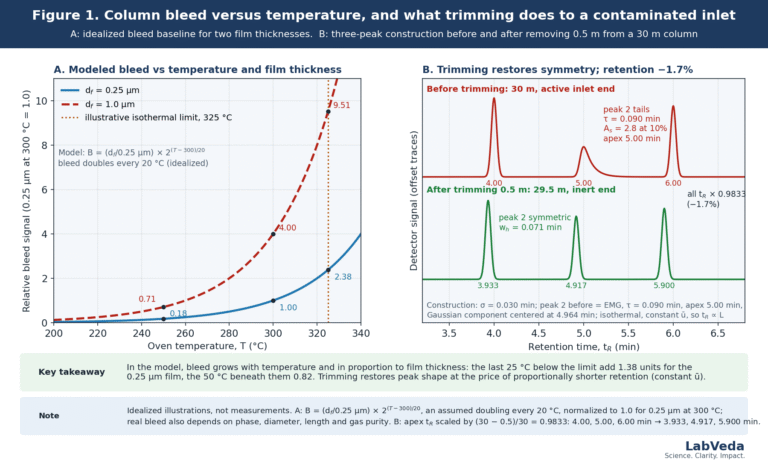
GC Capillary Column Care: Installation, Conditioning, Trimming and Storage
GC capillary column care is the control of three failure modes: mechanical damage to the fused-silica tube and its polyimide coating; contamination…
Preparation of Ammonium Sulfate Saturated Solution
Introduction Ammonium Sulfate is commonly used for reagent for protein precipitation (ammonium sulfate precipitation) and fractionation as it enhances hydrophobic interactions. Ammonium…
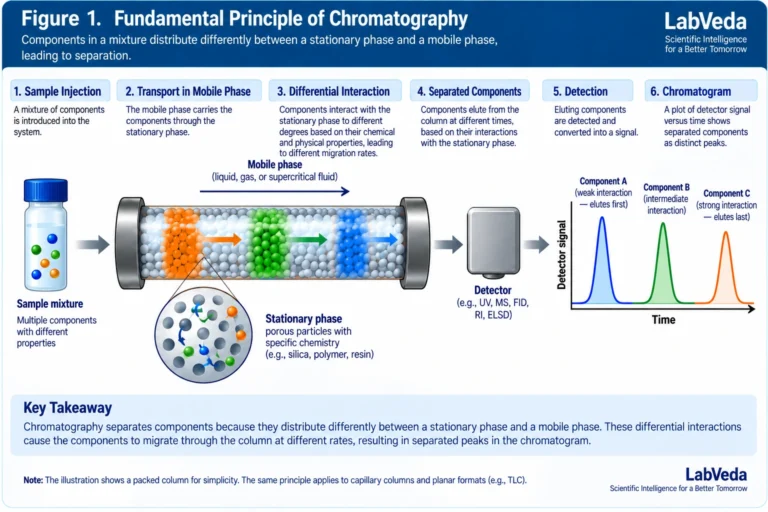
What Is Chromatography? Principles, Types, Separation Mechanisms, and Applications
Chromatography is a physical separation method in which the components of a mixture distribute differently between a stationary phase and a mobile…
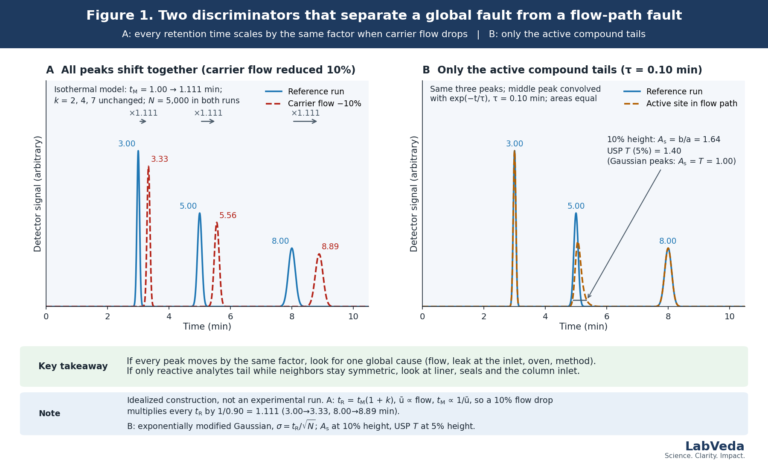
Gas Chromatography Troubleshooting: Symptoms, Causes and a Diagnostic Path
Gas chromatography troubleshooting is the discipline of working from the symptom pattern of a failing chromatogram, not from a suspected part, to…
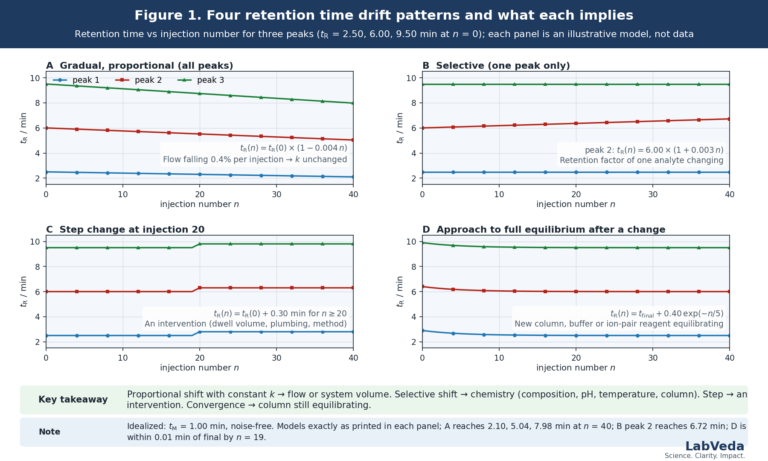
Drifting HPLC Retention Times: Causes, Diagnosis and Fixes
Drifting HPLC retention times are diagnosed by their pattern. Because tR = tM(1 + k), a shift that moves every peak by…
Molarity of 50% (w/w) Sodium Hydroxide (NaOH)
Overview A 50% solution of sodium hydroxide is a clear and colorless liquid. It is available is in premade format from a…
Chromatography Terms
HPLC Column Cleaning
As HPLC chemists we know that columns do have a finite lifetime. You column life time (total number of samples you can…
Molarity of 37% (w/w) Hydrochloric Acid (HCl)
Overview Preparation Step 1: Calculate the volume of 100 grams of Hydrochloric acid. Formula: Density = weight / volume or Volume = …