
The Knowledge Hub
Practical troubleshooting guides for working analytical chemists — HPLC, UHPLC, LC-MS, GC, and reagent prep. Each guide is diagnostic-first and linked to the tool that resolves it.
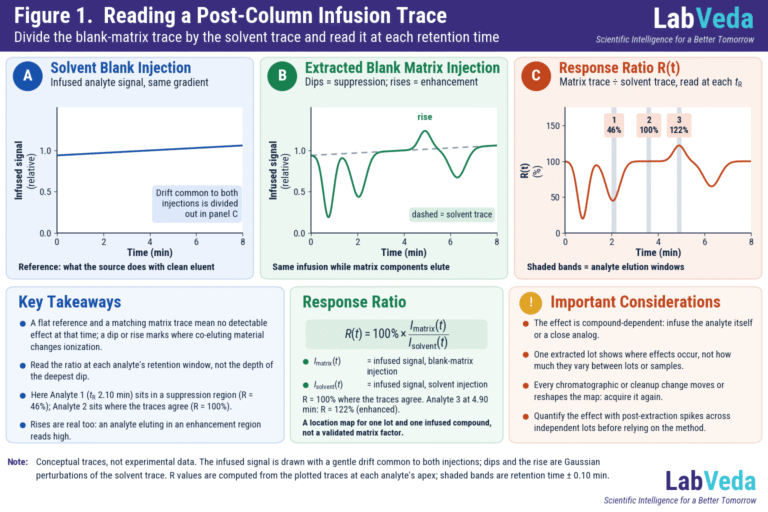
Post-Column Infusion for LC-MS Matrix-Effect Diagnosis: Setup, Interpretation and Limits
Post-column infusion is a qualitative LC-MS experiment that shows where in a chromatographic run co-eluting matrix components suppress or enhance ionization. A…
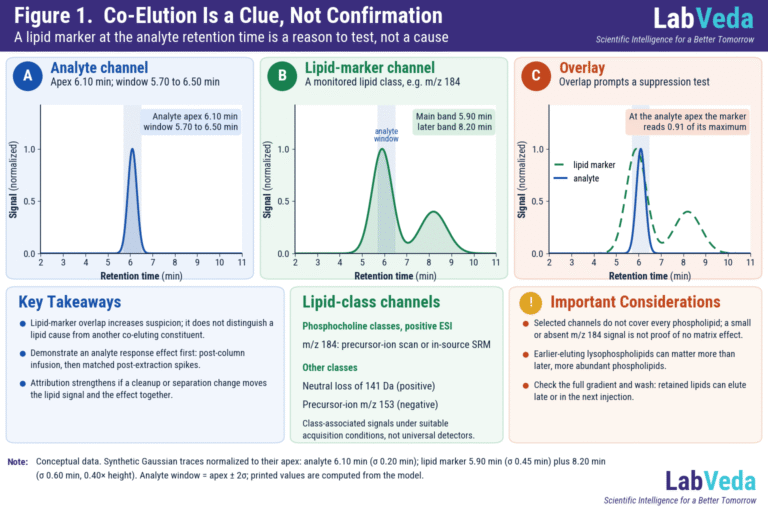
Phospholipid Interference in LC-MS/MS: How to Detect, Remove and Control It
Phospholipid interference in LC-MS/MS happens when phospholipids carried through sample preparation co-elute with an analyte and change its ionization. In a quantitative…
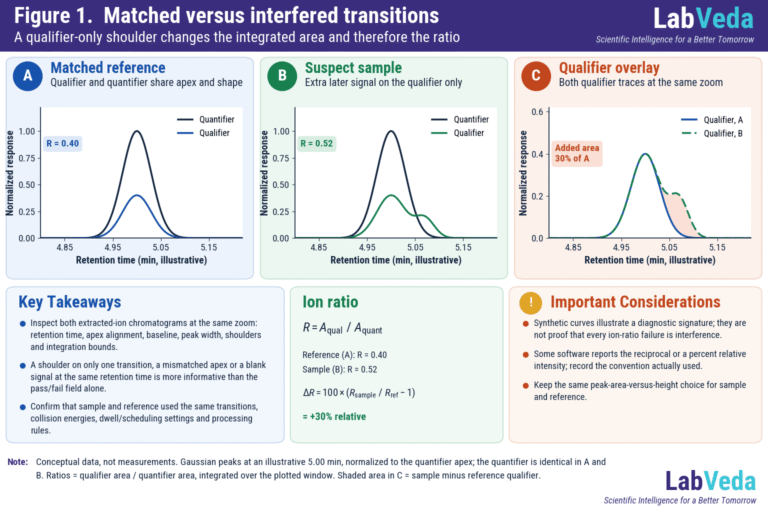
Why Does My LC-MS/MS Qualifier/Quantifier Ion Ratio Fail?
A failed qualifier/quantifier ion ratio means the relative responses of two monitored transitions differ from an appropriate reference. The deviation can reveal…
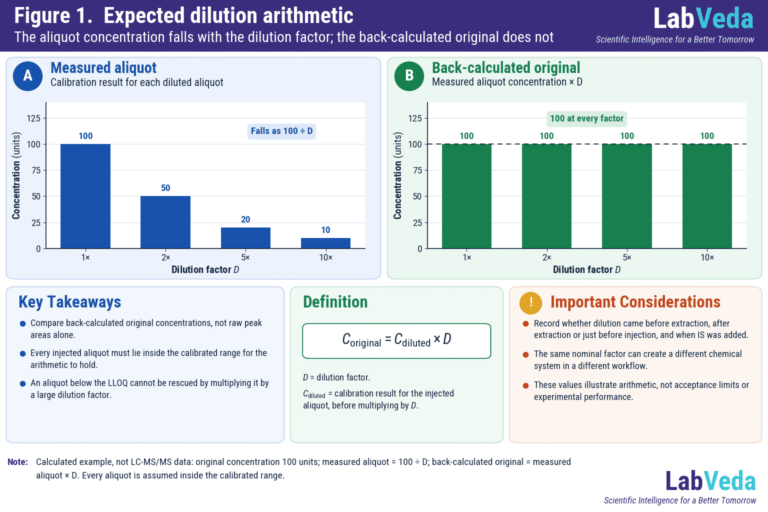
Why Does My LC-MS/MS Result Change After Dilution?
If the concentration you calculate for the original sample changes with the dilution factor, the result is a pattern, not yet a…
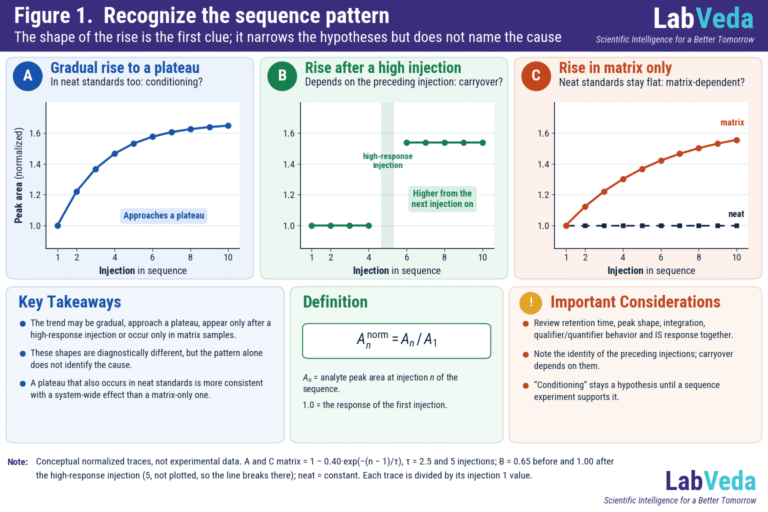
Why Are My LC-MS Peak Areas Increasing Across a Sequence? Causes, Diagnosis and Corrective Actions
An LC-MS/MS peak area that climbs across an injection sequence is a pattern, not a diagnosis. The rise can come from the…
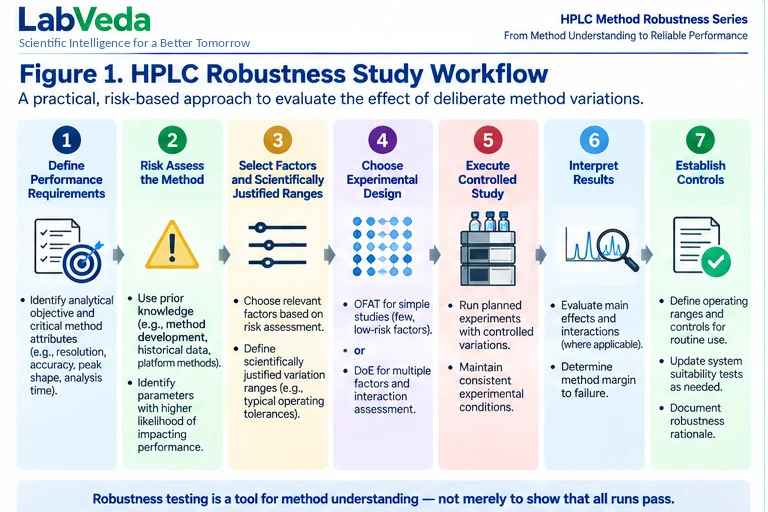
HPLC Method Robustness Testing: Parameters, Experimental Design and Interpretation
HPLC method robustness is the capacity of an analytical procedure to meet its expected performance requirements during normal use when procedure parameters…
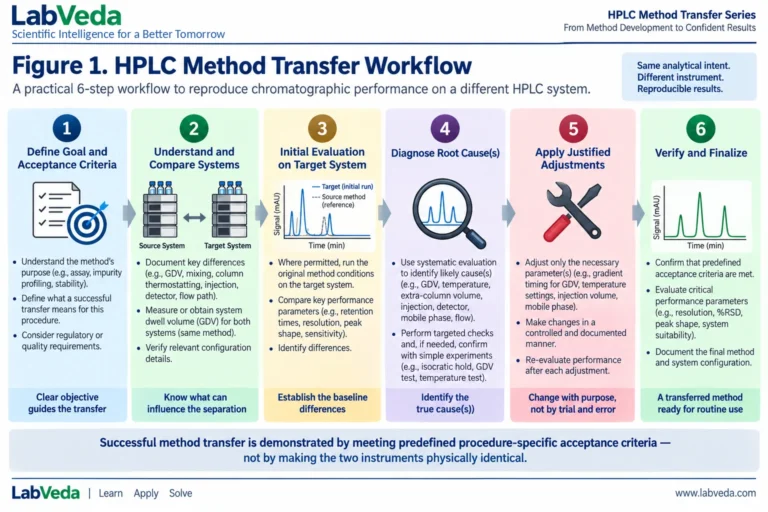
HPLC Method Transfer Between Instruments: A Practical Guide to Reproducing Chromatographic Performance
HPLC method transfer is the controlled process of moving an analytical procedure from one instrument, laboratory or LC platform to another while…
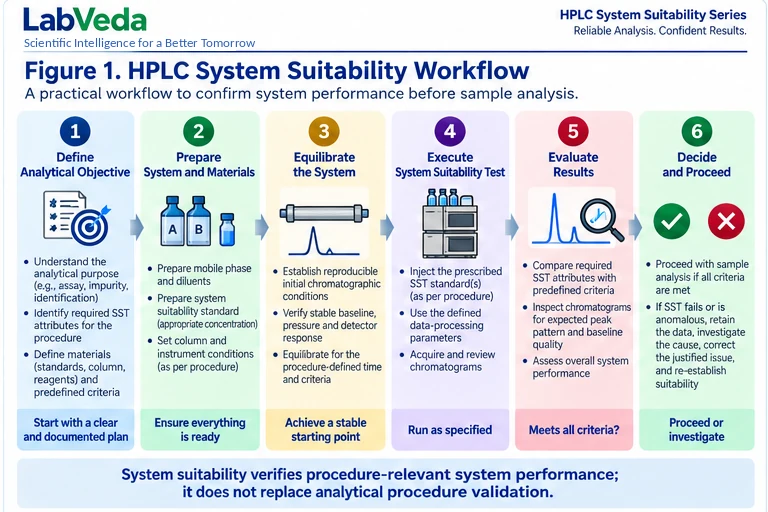
HPLC System Suitability: Parameters, Interpretation and Troubleshooting
HPLC system suitability testing (SST) is a predefined check that verifies the chromatographic measurement system and the analytical operations of a procedure…
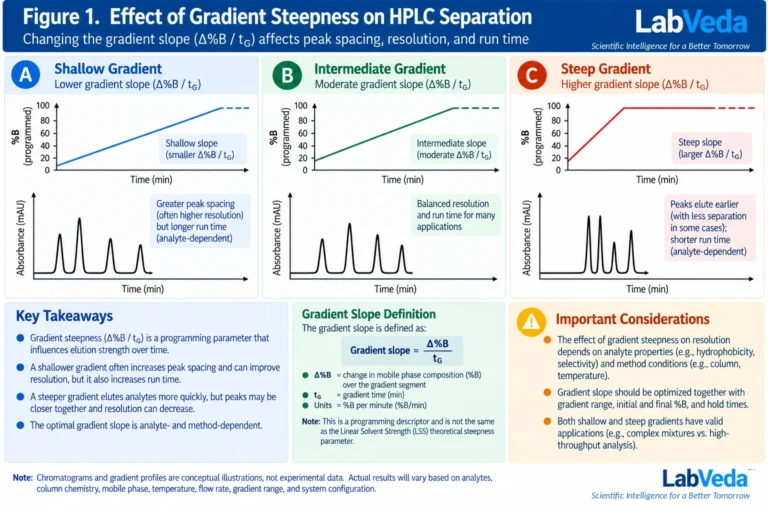
Gradient Optimization in HPLC: Steepness, Selectivity, Resolution, and Run Time
Gradient optimization in HPLC is the systematic adjustment of a solvent program — its steepness, range, shape, gradient time, wash and re-equilibration…
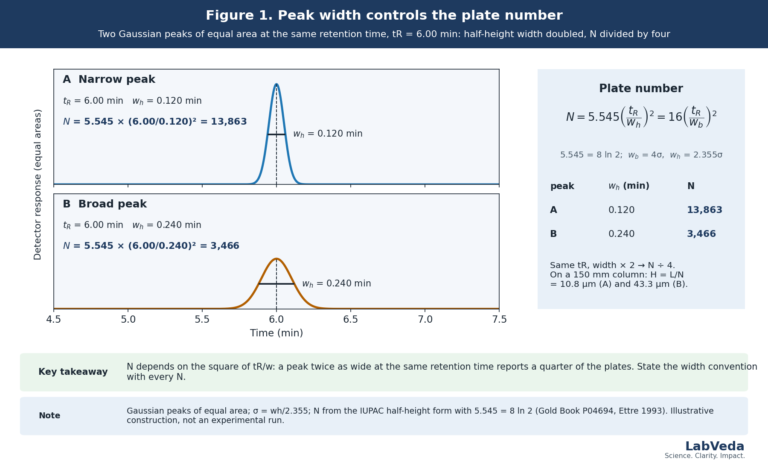
HPLC Theoretical Plates (N) and HETP: Formula, Calculation and Efficiency
How to calculate HPLC theoretical plates (N) and plate height (HETP), what the numbers mean, and whether low efficiency is the column,…
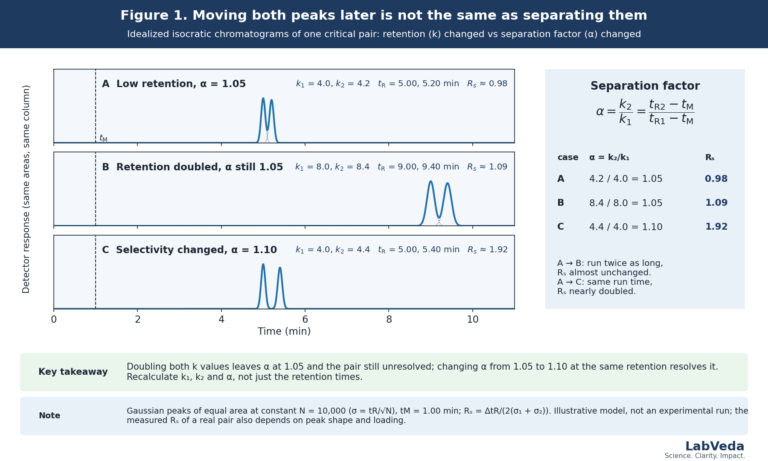
HPLC Separation Factor (α): Formula, Selectivity and How to Change It
How to calculate the HPLC separation factor α from retention factors, why it has the most leverage on resolution, and which variables…
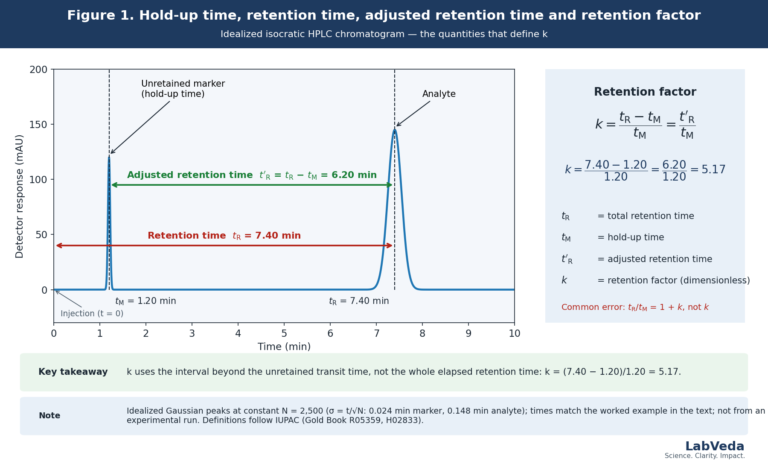
HPLC Retention Factor (k): Formula, Calculation and What the Value Means
How to calculate the HPLC retention factor k from retention time and hold-up time, what k values mean, why k′ is legacy…