
The Knowledge Hub
Practical troubleshooting guides for working analytical chemists — HPLC, UHPLC, LC-MS, GC, and reagent prep. Each guide is diagnostic-first and linked to the tool that resolves it.
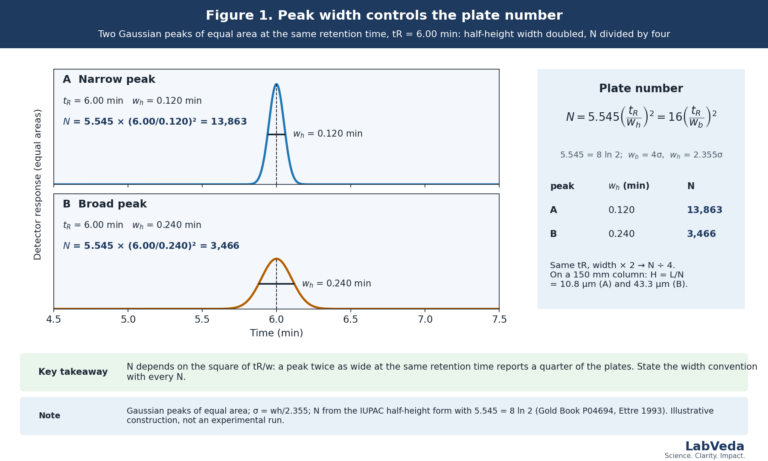
HPLC Theoretical Plates (N) and HETP: Formula, Calculation and Efficiency
How to calculate HPLC theoretical plates (N) and plate height (HETP), what the numbers mean, and whether low efficiency is the column,…
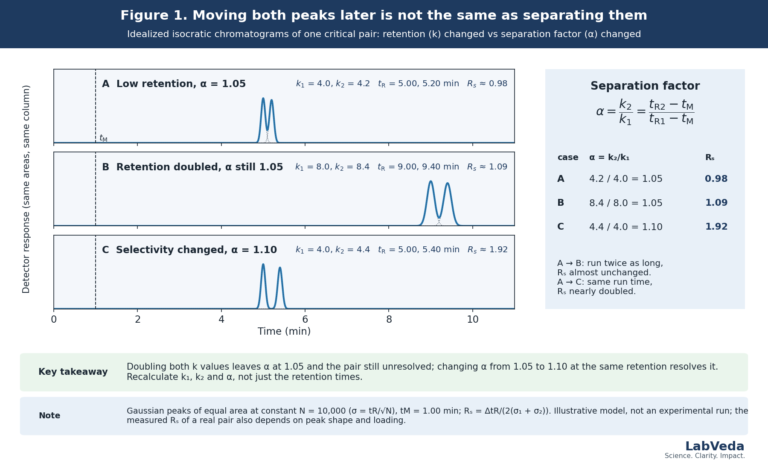
HPLC Separation Factor (α): Formula, Selectivity and How to Change It
How to calculate the HPLC separation factor α from retention factors, why it has the most leverage on resolution, and which variables…
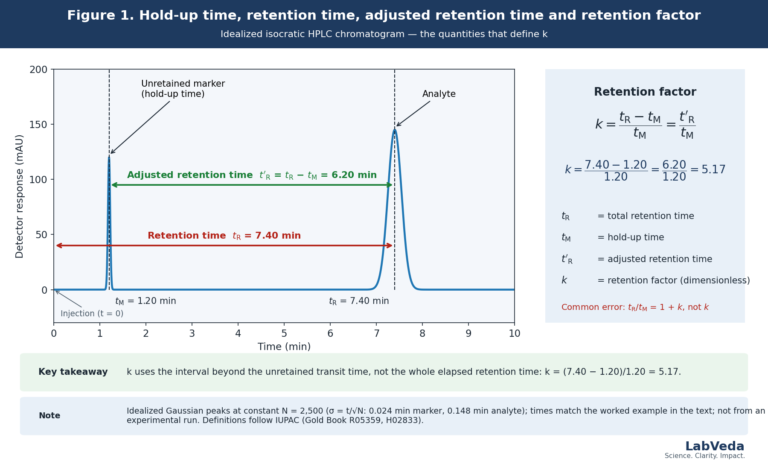
HPLC Retention Factor (k): Formula, Calculation and What the Value Means
How to calculate the HPLC retention factor k from retention time and hold-up time, what k values mean, why k′ is legacy…
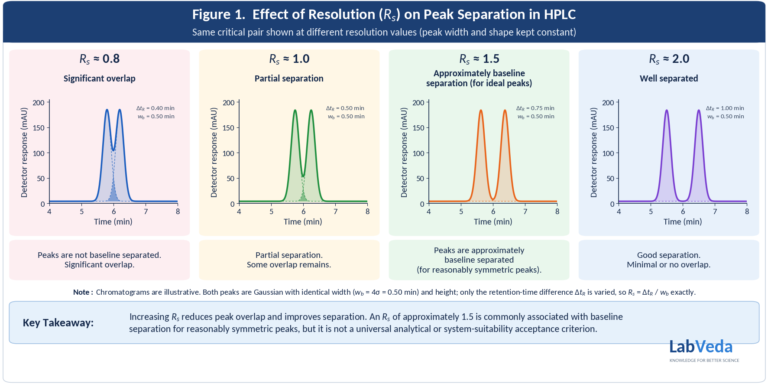
HPLC Resolution (Rs): Formula, Meaning and How to Improve It
HPLC resolution (Rs) explained: formula, worked example, what Rs = 1.5 means, and how efficiency (N), separation factor (α) and retention (k)…
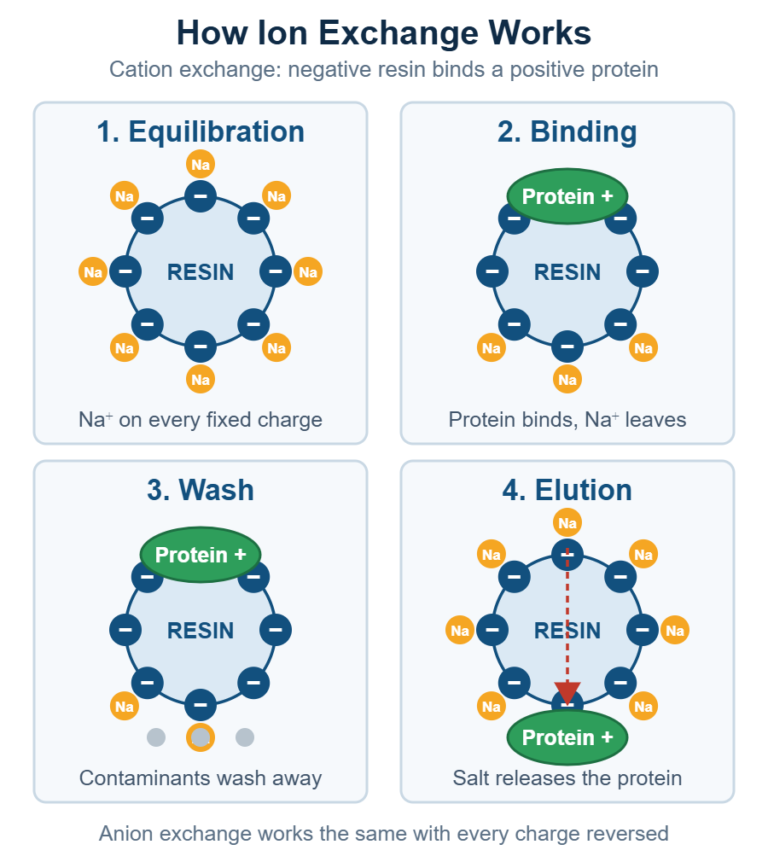
Ion Exchange Chromatography (IEX): Anion vs Cation, Resin Selection, and Method Setup
How ion exchange chromatography works, when to choose anion vs cation exchange, strong vs weak resins, and how to fix poor binding…
Ion Suppression and Matrix Effects in LC-MS
Ion suppression is a loss of analyte signal caused by co-eluting matrix components competing for charge during electrospray ionisation. It is the…
LC-MS Sensitivity Loss: A Six-Step Diagnostic Checklist
Diagnosing LC-MS sensitivity loss means answering one question first: are analyte molecules failing to reach the source, failing to ionise once there,…
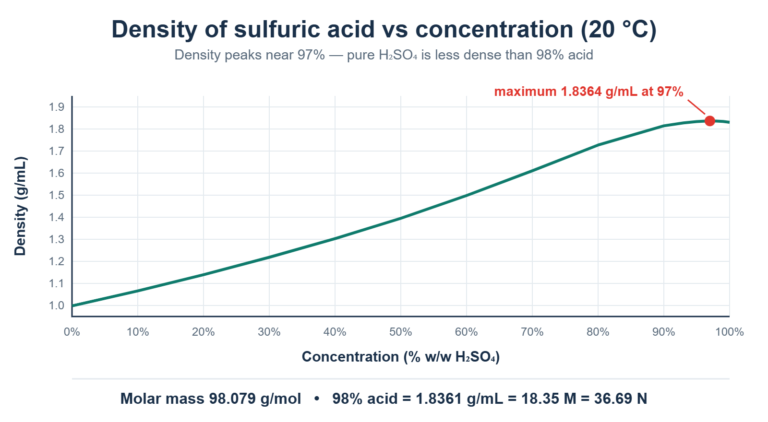
Sulfuric Acid (H2SO4): Density, Molar Mass and Concentration Table
Density of H2SO4 at every concentration from 10% to 98%, with molarity and normality. Molar mass 98.079 g/mol, plus dilution volumes and…
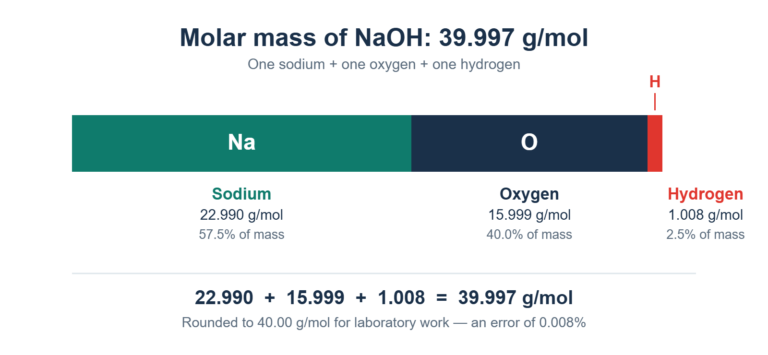
Molar Mass of NaOH (Sodium Hydroxide): Value, Calculation and Lab Use
The molar mass of NaOH is 39.997 g/mol (40.00 g/mol in practice). See the calculation, gram-to-mole conversions, and how much to weigh…
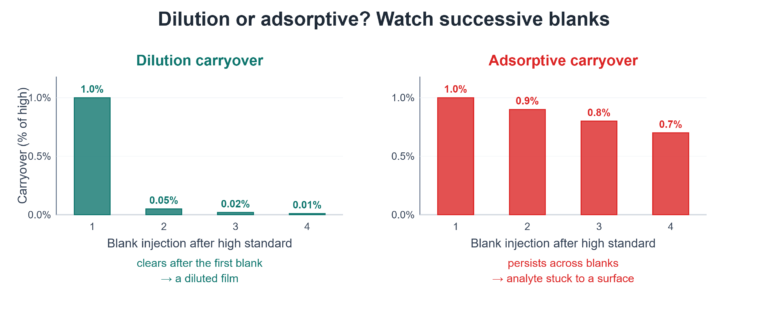
Autosampler Carryover in HPLC and LC-MS: How to Find It and Wash It Out
Figure 1. Carryover across successive blank injections. Dilution carryover falls to near zero after the first blank; adsorptive carryover decays slowly and…
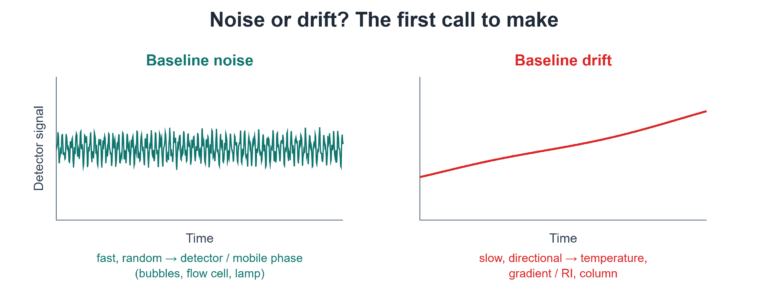
HPLC Baseline Noise and Drift: How to Tell Them Apart and Fix Each
Figure 1. Noise versus drift. Fast random jitter points to the detector or mobile phase; a slow directional shift points to temperature,…
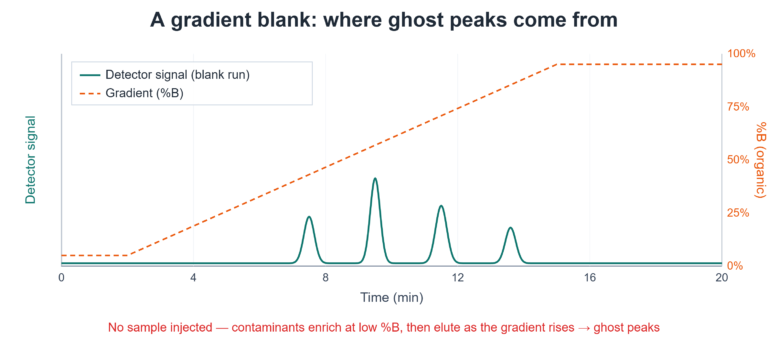
Ghost Peaks in HPLC: What Causes Them and How to Eliminate Them
Figure 1. Ghost peaks in a gradient blank. Sharp peaks elute as %B rises even though nothing was injected — contaminant concentrated…